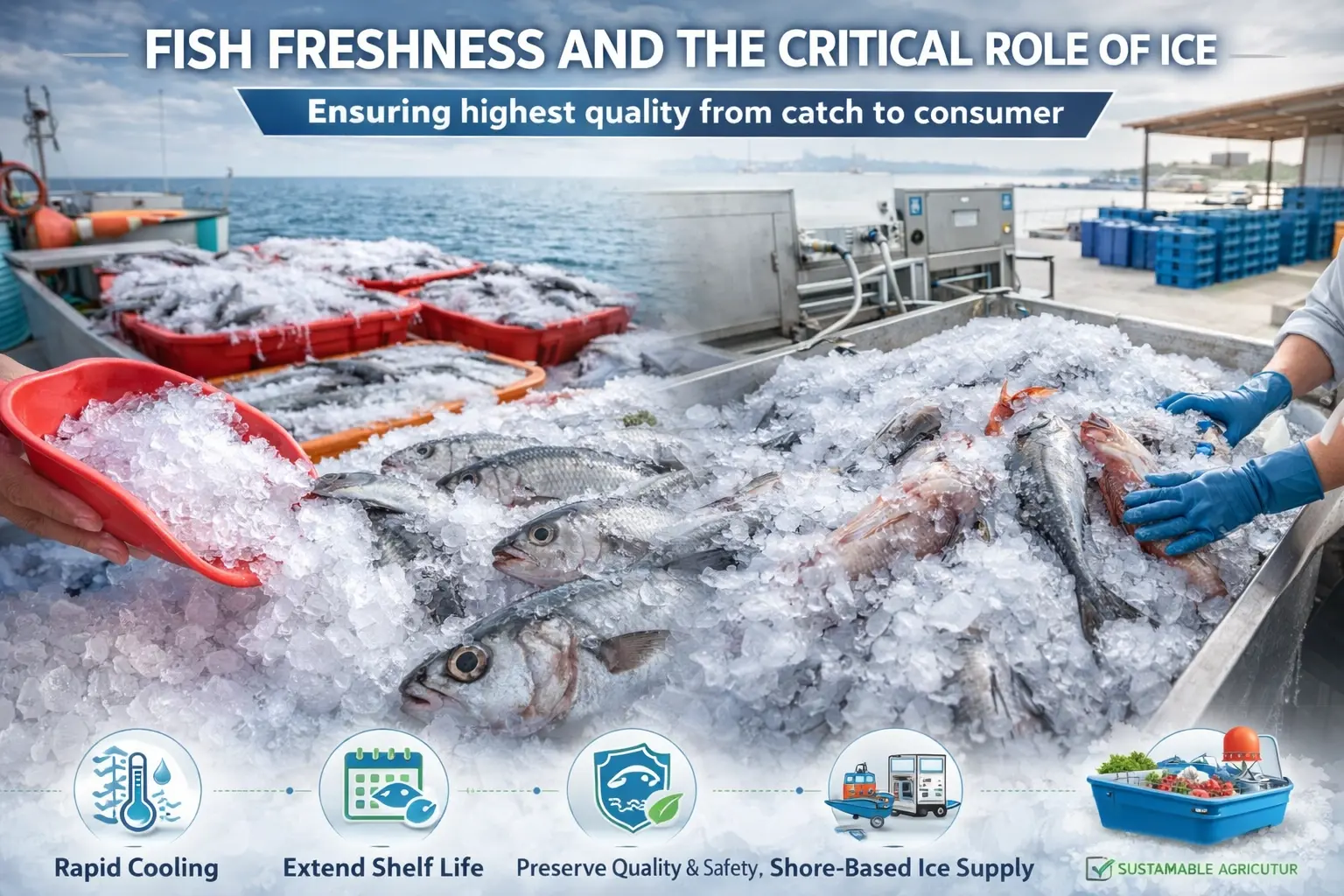
Fish is widely recognized as one of the healthiest and most nutritious food sources in the global food industry. Rich in high-quality protein, omega-3 fatty acids, essential vitamins, and minerals, seafood holds an indispensable place in balanced nutrition worldwide. However, unlike many other protein sources, fish is highly perishable. From the moment it is harvested, biological and chemical changes begin that can rapidly affect quality, texture, aroma, and food safety.
For this reason, maintaining freshness from the point of catch to the consumer’s table is not simply a matter of convenience—it is a technical and logistical challenge that requires precision, hygiene, and effective temperature control. Among all preservation methods used in fisheries, ice remains the most practical, economical, and reliable solution. The relationship between fish and ice is therefore not incidental; it is fundamental to ensuring product quality and commercial value.
The Journey of Fish and Its Encounter with Ice
From the very first moment fish are caught, rapid cooling is essential. The temperature of freshly harvested fish is typically close to the surrounding water temperature. Without immediate cooling, bacterial growth accelerates and enzymatic activity begins to degrade tissue quality. Even a few degrees of temperature increase can significantly shorten shelf life.
On large fishing vessels, cold storage rooms are commonly installed to maintain low ambient temperatures. However, cold air circulation alone is often insufficient to guarantee rapid core cooling. Direct contact cooling using ice is far more efficient. For this reason, fish are commonly mixed with ice immediately after harvesting and then stored in insulated compartments or refrigerated holds.
This method ensures that the fish temperature drops quickly to near 0°C, slowing microbial growth and preserving texture and appearance. In commercial operations, this step can mean the difference between premium-grade seafood and downgraded product categories.
Ice Production on Medium and Large Fishing Vessels
In medium and large-scale fishing boats, ice is typically produced onboard using industrial ice machines. Among the available technologies, flake ice machines are the most widely preferred solution for fisheries.
Flake ice offers several key advantages:
-
Thin, flat structure allowing close contact with fish surfaces
-
Rapid heat transfer due to high surface area
-
Minimal physical damage to delicate fish tissue
-
Uniform distribution during mixing
-
Fully automatic production cycles
A flake ice machine continuously produces ice into a storage bin, ensuring a steady and reliable supply throughout the fishing operation. Modern systems operate automatically with minimal supervision, reducing labor requirements and ensuring consistent ice quality.
The thin sheet-like structure of flake ice allows it to penetrate gaps between fish, ensuring even cooling. Because of its flexibility and softness compared to block or cube ice, it minimizes bruising and preserves visual quality an essential factor in premium seafood markets.
Under optimal conditions, properly iced fish can be stored at temperatures around -1°C to 0°C for extended periods. In many fishing operations, ice maintained at approximately -5°C can preserve fish freshness for up to 24 hours or more before landing, providing sufficient time for transportation and distribution planning.
Ice Usage on Small Fishing Boats
Smaller fishing vessels typically under 10 meters in length may not have the space, power supply, or structural capacity to install onboard ice production equipment. In such cases, fishermen obtain ice from shore-based ice producers prior to departure.
These vessels generally load between 100 kg and 500 kg of ice depending on the expected catch volume and trip duration. The ice is stored in insulated containers or fish holds, ready for immediate use once fish are harvested.
While this method lacks onboard production flexibility, it remains highly effective when proper planning and storage practices are followed. Shore-supplied flake ice or crushed ice provides small-scale fishermen with an affordable and practical freshness solution.
Best Practices for Ice Application in Fisheries
Using ice in fisheries is not merely about cooling; it requires proper technique and hygiene standards. Fish should be layered with ice in alternating arrangements to ensure full coverage. Care must be taken to avoid excessive pressure that could damage the fish structure.
Key considerations include:
-
Using potable water for ice production
-
Maintaining hygienic storage conditions
-
Ensuring rapid application immediately after catch
-
Avoiding meltwater accumulation through proper drainage
-
Monitoring temperature regularly
The ratio of ice to fish typically varies depending on climate and trip duration. In warm climates, a 1:1 ice-to-fish ratio may be necessary to maintain ideal preservation conditions.
Economic and Quality Advantages of Proper Ice Management
Effective ice management provides multiple commercial advantages:
-
Extended shelf life
-
Improved product grading
-
Reduced spoilage losses
-
Higher market prices
-
Compliance with food safety standards
For seafood exporters and processors, maintaining consistent cold chain integrity is essential. Ice plays a central role in bridging the gap between harvesting and cold storage facilities on land.
Tamutom Ice Machines: Supporting Global Fisheries
With decades of experience in industrial ice production technology, Tamutom Ice Machines delivers high-performance, user-friendly solutions to fisheries worldwide. Today, Tamutom exports to 88 countries, providing reliable ice machines built to meet international quality standards.
Tamutom’s flake ice machines are designed for continuous operation, energy efficiency, and long service life. Their robust construction, corrosion-resistant materials, and automated control systems ensure dependable performance even in demanding marine environments.
By combining engineering precision with practical design, Tamutom supports fishing operations of all scales from small coastal boats to large industrial fleets.
The relationship between fish and ice is essential to modern fisheries. From the moment of harvest to final consumption, maintaining optimal temperature determines product quality, safety, and commercial value. Whether produced onboard or sourced from shore facilities, ice particularly flake ice remains the most effective method for preserving freshness.
In a highly competitive seafood market where quality defines reputation, investing in reliable ice production technology is not merely an operational decision; it is a strategic advantage.
For more detailed information about flake ice machine capacities and technical specifications, professional consultation is recommended to determine the most suitable solution for your fishing operations.