How to Choose the Right Industrial Ice Machine for Your Business
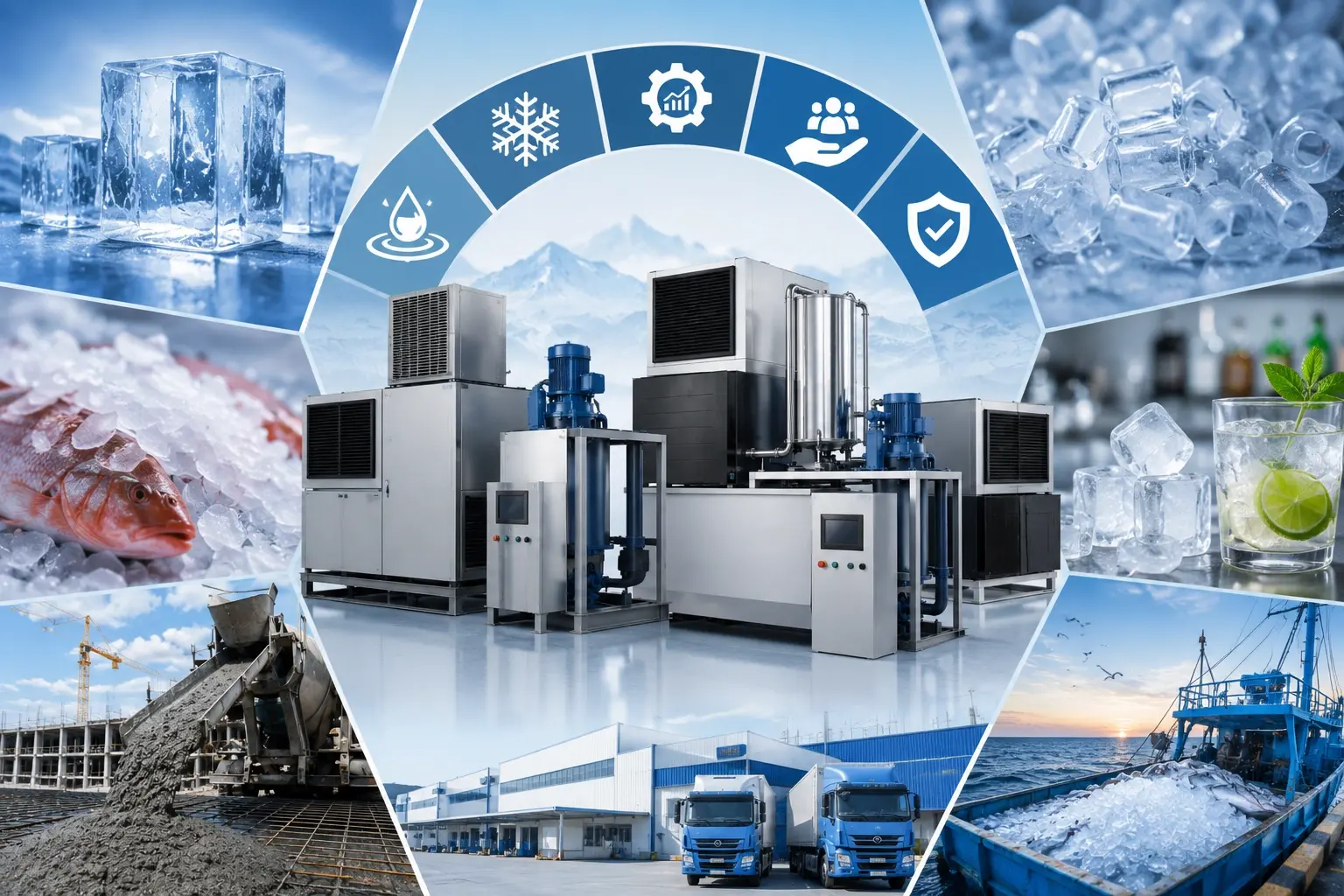
Industrial ice machines play a critical role in industries such as fisheries, food processing, concrete cooling, logistics, healthcare, and packaged ice production. However, every business has different requirements, and selecting the wrong machine can lead to higher operating costs, reduced efficiency, and production losses.
So, what should you consider when purchasing an industrial ice machine in 2026?
This guide covers the most important factors to help you make the right investment.
1. Determine Your Daily Ice Demand
The first step is to accurately calculate your daily ice consumption.
Ask yourself:
- How many tons of ice do I need per day?
- How much will demand increase during peak seasons?
- Is my business expected to grow in the coming years?
For example:
- Small fishing operations: 1–5 tons/day
- Medium-sized businesses: 5–20 tons/day
- Large industrial facilities: 20+ tons/day
Choosing the right capacity directly impacts both investment costs and operational efficiency.
2. Select the Right Ice Type
Different industries require different types of ice.
Block Ice
Applications:
- Fishing industry
- Concrete cooling
- Long-term storage
Advantages:
- Slow melting rate
- Easy transportation
- Excellent performance in hot climates
Tube Ice
Applications:
- Packaged ice production
- Beverage industry
- Supermarkets
Advantages:
- Crystal-clear appearance
- High commercial value
- Easy packaging
Flake Ice
Applications:
- Seafood industry
- Food processing
- Cold chain logistics
Advantages:
- Rapid cooling
- Full product coverage
- Minimal product damage
Cube Ice
Applications:
- Hotels
- Restaurants
- Cafés
- Bars
Advantages:
- Premium appearance
- Slow melting
- Ideal for beverages
3. Consider Climate Conditions
The operating environment has a direct impact on machine performance.
Particularly in regions such as:
- Africa
- The Middle East
- South Asia
high ambient temperatures can significantly affect ice production efficiency.
Before purchasing, evaluate:
- Ambient temperature
- Humidity levels
- Water temperature
These factors should always be included in the system design.
4. Evaluate the Cooling System
Air-Cooled Systems
Advantages:
- Lower initial investment
- Easier installation
Disadvantages:
- Reduced efficiency in extremely hot environments
Water-Cooled Systems
Advantages:
- Stable performance
- Better efficiency in high-temperature regions
Disadvantages:
- Higher water consumption
Choosing the correct condenser type is essential for maximizing performance and reliability.
5. Focus on Energy Efficiency
An industrial ice machine is a long-term investment that operates continuously.
Important considerations include:
- Compressor efficiency
- Refrigerant type
- Insulation quality
- Automation technology
High-efficiency systems can significantly reduce operating costs over their lifespan.
6. Assess Automation and Ease of Operation
Modern ice machines offer much more than ice production.
Advanced systems may include:
- PLC control systems
- Touchscreen interfaces
- Remote monitoring
- Automatic fault diagnostics
- Production reporting
These features improve operational reliability while reducing maintenance costs.
7. Investigate After-Sales Support
The quality of an ice machine is measured not only by production performance but also by after-sales service.
Verify:
- Warranty coverage
- Spare parts availability
- Technical support services
- Remote assistance capabilities
- Installation and operator training
Strong after-sales support protects your investment and minimizes downtime.
8. Plan for Future Growth
Many businesses purchase equipment based solely on current requirements.
However, future factors such as:
- Market expansion
- Increased production capacity
- Export opportunities
may require additional ice production capacity.
Modular and expandable systems provide greater flexibility and long-term value.
Choosing the right industrial ice machine is a strategic investment that directly affects your company's productivity and profitability.
Before making a purchase, ask yourself:
✔ How much ice do I need daily?
✔ Which ice type best suits my business?
✔ What are my local climate conditions?
✔ How much energy will the system consume?
✔ Can the manufacturer provide long-term technical support?
With proper planning and the right supplier, your industrial ice machine can deliver reliable and cost-effective performance for many years.