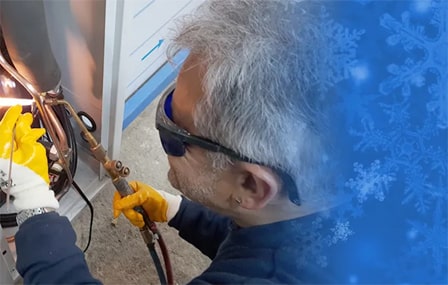
In flake ice machine manufacturing, understanding the refrigeration cycle is essential for efficient design and maintenance. The system operates on the vapor compression cycle, consisting of four primary components: compressor, condenser, expansion valve, and evaporator. The refrigerant flows continuously through these components, absorbing heat in the evaporator and rejecting it in the condenser.
Flake ice machines are specifically designed to operate at low evaporating temperatures to ensure rapid ice formation. An efficient cycle allows the ice machine supplier to provide consistent ice production even under high ambient conditions.
In industrial ice machine manufacturing, refrigerant selection is critical. TAMUTOM uses primarily R404A and R134a, both reliable and globally available gases.
Proper superheat (5–10 K) ensures vapor-only return to the compressor, preventing liquid slugging. Excessive subcooling may cause overfeeding in the expansion valve and irregular ice formation inside the evaporator.
The expansion valve (TXV) regulates refrigerant flow into the evaporator. During flake ice machine operation, it ensures optimal feed for stable evaporation and consistent ice quality.
Incorrect TXV setup can cause frost on the compressor or weak ice production. Calibration should be verified before shipment.
The liquid line carries condensed refrigerant to the expansion valve and should include a filter-drier, sight glass, and moisture indicator. Long liquid lines increase flash gas risk and unstable feed.
Common frost causes:
Solutions:
| Problem | Possible Cause | Solution |
|---|---|---|
| High Pressure | Dirty condenser, overcharge, or fan malfunction | Clean condenser, check airflow, adjust charge |
| Low Pressure | Leak, valve restriction, or low load | Leak test, valve adjust, load balance |
| Fluctuating Pressure | Moisture or blocked filter-drier | Replace drier, vacuum system, recharge |
Efficiency depends on condenser cleanliness, fan function, and refrigerant charge. Proper calibration ensures optimal performance.
Common issues:
| Symptom | Likely Cause | Solution |
|---|---|---|
| Ice not forming | Low refrigerant charge | Leak test and recharge |
| Ice too thin | Overfeeding TXV | Adjust superheat |
| Compressor overheating | Poor condenser airflow | Inspect fan and clean fins |
Always handle refrigerants responsibly using recovery systems and PPE. Avoid mixing gases or non-approved oils to prevent corrosion.
TAMUTOM continues to develop advanced flake ice machine solutions with improved durability and energy efficiency, exporting to over 90 countries worldwide.
Flake ice machines combine thermodynamics, precision control, and advanced mechanics. Maintaining proper refrigerant levels and airflow ensures maximum reliability. TAMUTOM remains committed to innovation and sustainable manufacturing practices.